I have a friend who is currently separated from her husband of more than twenty years. They share two sons, and in the wake of the separation, those sons have taken to resenting their mother for leaving their father.
It’s heartbreaking to witness—not only because of the fractured family dynamic, but because of what it reveals about how we, as a society, respond to someone who chooses to leave.
When a person walks away from a relationship—whether that relationship is a marriage, a family system, or even a long-standing friendship—they are almost immediately labeled as the villain. The leaver becomes the problem and the story is simplified into something easy to digest: they caused the rift, they broke the family apart, they didn’t try hard enough, they gave up.
It’s a narrative that offers comfort to outsiders because it removes the need for complexity. If there is a clear villain, then there is no need to wrestle with nuance. No need to sit in discomfort. No need to confront the possibility that staying isn’t always the more righteous or loving choice.
What frustrates me most is how rarely people stop to ask why.
People seldom get curious about the circumstances that lead someone to take such a drastic step. They don’t ask what was endured quietly over years. They don’t ask how many conversations were attempted behind closed doors, how many compromises were made, or how long the decision was wrestled with in prayer, tears, and fear before it was finally made. Instead of curiosity, there is judgment. Instead of compassion, there are conclusions.
And yet, leaving is rarely impulsive.
Leaving is often the very last option after every other avenue has been exhausted. It comes after years of trying, hoping, praying, compromising, waiting, and believing that change might still be possible. It is frequently the result of a painful realization that staying is no longer safe, healthy, or sustainable—emotionally, mentally, spiritually, and sometimes physically. Not every departure is fueled by anger or bitterness. Sometimes it is fueled by survival. Sometimes it is fueled by the quiet understanding that remaining will slowly erode what is left of a person’s soul.
I know this because I have lived it.
I have been judged harshly for many of the decisions I’ve made throughout my life—leaving relationships and friendships, stepping away from environments that were harming me, and distancing myself from certain groups of people. From an outsider’s perspective, those choices may have looked abrupt, unnecessary, or even selfish. From the inside, however, they were anything but. They were carefully considered acts of preservation.
What people often fail to recognize is that the decision to leave usually comes after a long season of staying longer than one should have. After enduring things that required constant self-abandonment, and minimizing pain so others could remain comfortable. After convincing oneself that this is just “how it is” and learning to live with less than what is healthy or life-giving.
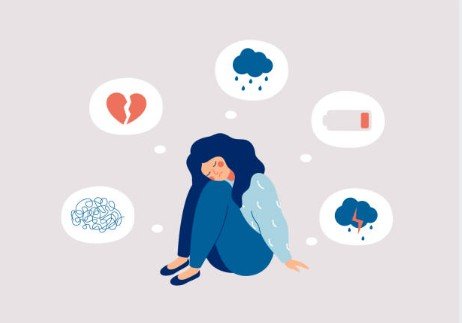
Not all departures are acts of rejection.
Some are acts of self-respect.
Some are acts of obedience—to truth, to God, to one’s own conscience.
Some are acts of necessity.
There are moments when staying costs more than leaving ever could. When remaining means silencing your voice, shrinking your spirit, and slowly losing your sense of self. When staying requires you to betray your own boundaries, values, or well-being, choosing to walk away in those moments is not weakness. It is clarity. It is the courage to acknowledge that love does not require self-destruction.
What I wish people understood is this: you never truly know what someone has survived to get to the point of leaving. You don’t see the prayers whispered in exhaustion late at night or the boundaries crossed repeatedly despite being clearly communicated. You don’t feel the internal war between wanting to do the “right” thing and knowing that continuing would mean abandoning yourself.
Leaving often means choosing a path that guarantees misunderstanding. It means accepting that others will rewrite your story without ever knowing the full truth. It means carrying the weight of being misjudged because you chose honesty over appearances.
Before we assign blame, we should pause.
Before we condemn, we should listen.
Before we take sides, we should seek understanding.
Because sometimes the bravest thing a person can do isn’t staying. It’s choosing themselves when staying would mean disappearing—emotionally, spiritually, and sometimes even physically.
And perhaps instead of asking, “Why did they leave?”
We should be asking, “What did it cost them to finally go?”
#getcuriousnotcritical #leavingisnotfailure #choosingyourself #BoundariesMatter #emotionalhealth #healingjourney #CompassionOverJudgment #selfrespect #GrowthAndGrace